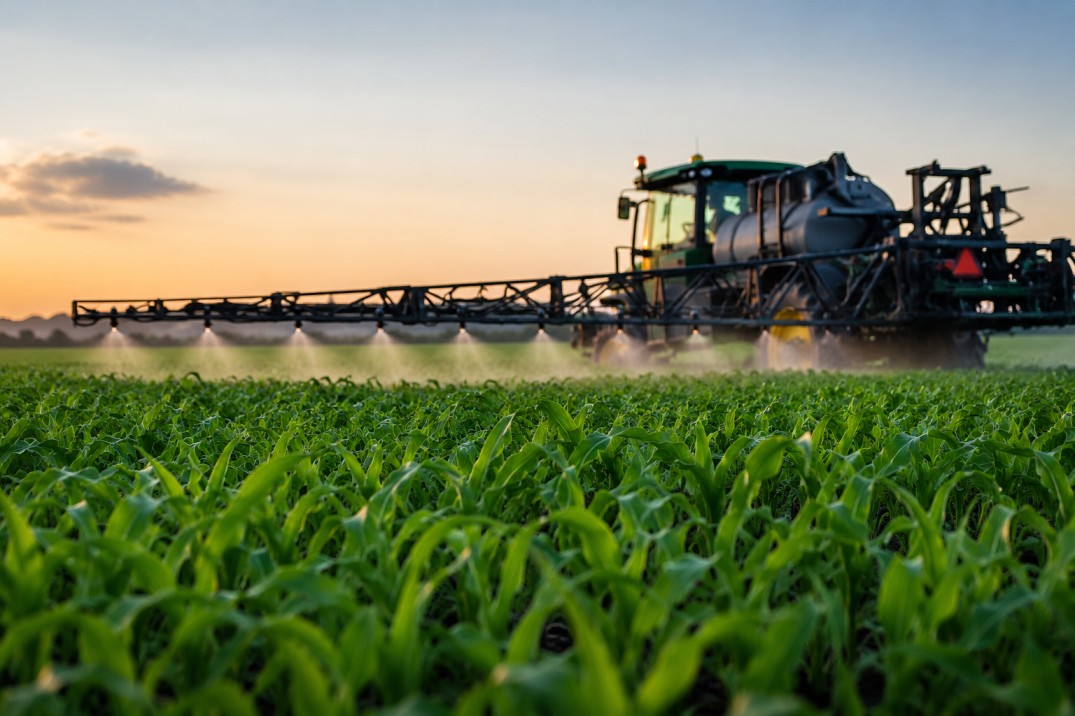
AI-Ready Fields: Preparing a Herbicide Strategy for Green-on-Green Spray Technology
The landscape of modern agriculture is being transformed by the integration of Artificial Intelligence (AI) and advanced sensor technology. As “Green-on-Green” (GoG) spraying capabilities hit a tipping point in the 2026 season, growers across the industry are entering a new era of precision. Although much attention is paid to the formidable robotics of driverless machines and the sophisticated electronics of smart sensors, growers and agronomists are beginning to see that the effectiveness of such systems is governed by the crop protection products that go into the tank. The true measure of technology lies in the quality of the chemicals it utilizes.
The shift to green-on-green precision
For years, “Green-on-brown” technology enabled the detection of green weeds against a bare-soil background. However, the true biological challenge is found in identifying and targeting specific weeds within a standing green crop. GoG systems utilize high-speed cameras and deep learning algorithms to differentiate between the crop and the biological adversary in real time.
When the AI identifies a weed, the system responds by having the nozzles deliver a specific spray, ensuring the chemical hits only the weeds. This extreme precision is meant to cut down on overall chemical usage to lessen the environmental impact of the operation. However, this surgical approach changes the requirements for the liquid inside the tank.
The demand for high-performance formulations in Canada
In traditional broadcast spraying, a large volume of water is utilized to ensure that the entire field is covered. In an AI-driven GoG system, the application is localized and highly concentrated. This shift toward ultra-low volume (ULV) and high-concentration demands is necessitating a change in how a herbicide in Canada is formulated and selected. Several factors must be considered when preparing a chemical strategy for smart sprayers:
- Solubility and stability: Some sprays can separate or plug the sprayer
- Droplet dynamics: Precision technology demands a uniform droplet size so that the “hit” on the weed will be impactful and drift is minimized.
- Tank-mix compatibility: Often multiple active ingredient are combined in an effort to reduce herbicide resistance, requiring compatible formulations even at low dilution rates.
Maximizing the Return on Investment (ROI)
A million-dollar investment in autonomous machinery is often made with the expectation of significant savings and increased efficiency. If a low-quality herbicide is used that leads to escapes or clogged nozzles, the ROI of the hardware is quickly diminished. High-tech fields are best served by advanced formulations that are optimized for the high-intensity environment of AI spraying.
Leading chemical manufacturers are now focusing on “AI-ready” formulations that prioritize consistency and power. By selecting products that are engineered for the specific pressures of precision agriculture, the risk of technical failure is reduced. This allows the grower to focus on the data and the strategy rather than the maintenance of the equipment.
Beyond the nozzle: A strategic investment
Making the switch to AI-based disciplines now is both a step to a more sustainable future and one that is more profitable. Despite the ongoing presence of weeds, the use of smart sensors alongside new chemical applications offers a strong defensive approach. When crop protection is viewed as a strategic investment rather than a simple expense, the long-term value of the land is better protected.
As autonomous units become a more common sight in Western Canada and beyond, the partnership between hardware and chemistry will only grow stronger. As we head into the 2026 season, the best operations will have the highest tech hardware running with the most advanced liquid solutions.
Preparing for the future of spraying
The transition to GOG technology is not exclusively adapting to the new tools available, To ensure the transition from agronomic process to the standard operation in production of GoG technology, several factors could be applied:
- Software calibration: Ensure the AI system is calibrated to accurately identify the weeds found in the fields.
- Formulation testing: Prior to use, confirm product compatibility with chemical reps.
- Water quality management: In concentrated formulations, the purity of the carrier water is more important than ever to avoid adverse chemical reactions.
- Nozzle maintenance: Frequent inspections are critical to make sure high-frequency valves are functioning as intended.
AI is no longer a choice, but a fundamental element of the process. Proper field and tank preparation is essential to maximizing the benefits of Green-on-Green spraying through AI. The future of high-tech success will be realized by the integration of biology and precision.



Post Comment